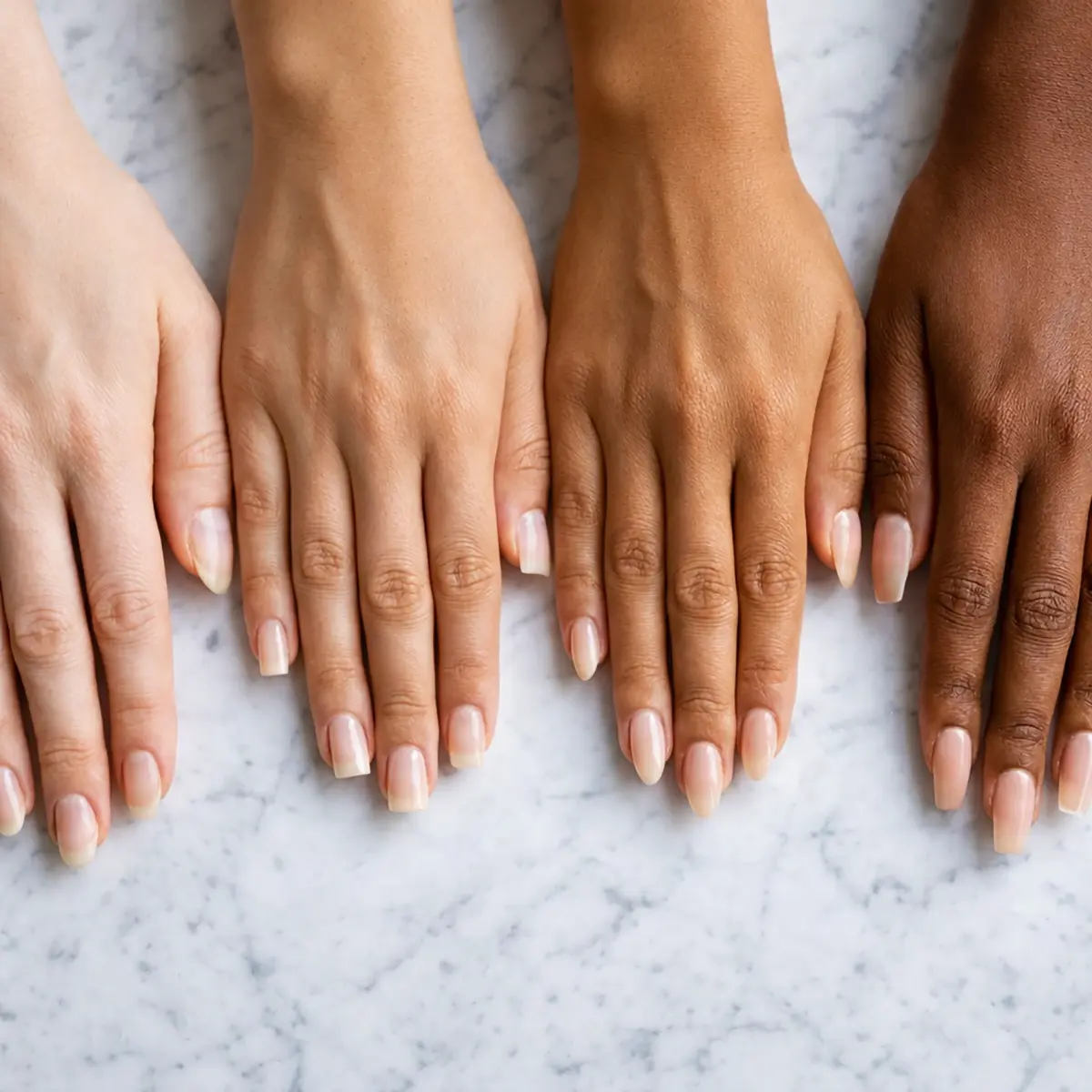
For years I picked nail shapes the same way I picked paint colors — whatever looked good on someone else’s Instagram. Coffin nails on a model with long slender fingers look incredible. On my hands, with short-ish palms and fingers that are more on the wide side, they looked like little platforms. Not the vibe.
The thing nobody tells you is that nail shapes for hand type follow a pretty simple logic once you understand it — it’s all about illusion. Certain shapes lengthen, others widen, some add elegance and some scream “I do my own gel at home and I’m proud of it.” This guide breaks down each major shape, who it actually flatters, and a few that surprised me when I finally tried them.
Oval — The Safe Bet That’s Actually Genius
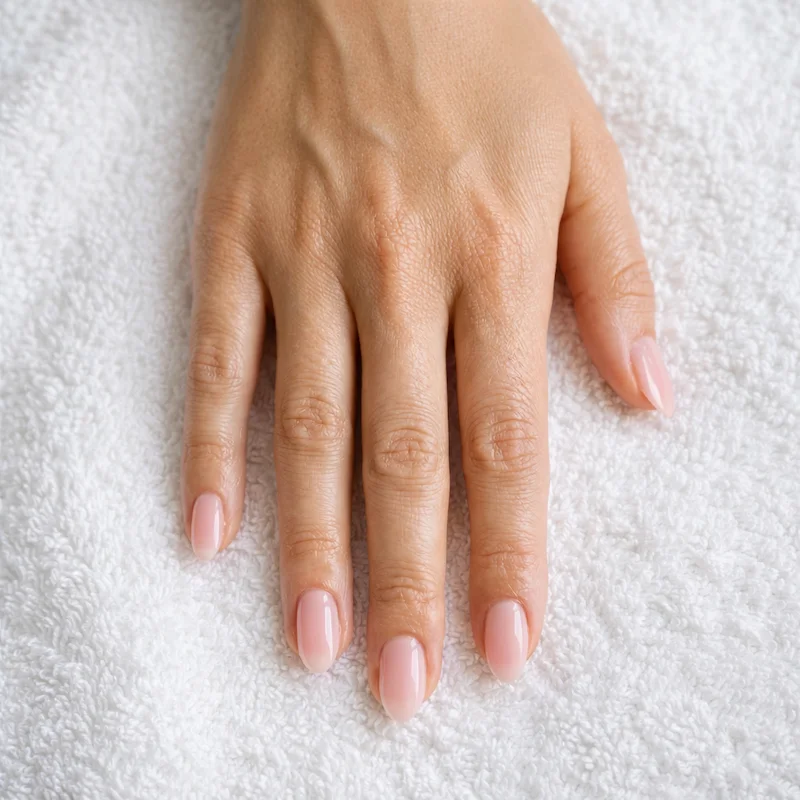
Oval is what I’d recommend to anyone who asks me where to start. It follows the natural curve of the fingertip, files down to a soft rounded point, and has this quiet way of making almost every hand look more elegant without trying too hard.
Wide palms? Oval draws the eye toward the tip rather than across the finger. Short fingers? The gentle elongation does its job without looking dramatic. Oval is also the most forgiving shape for natural nails because there are no sharp corners to catch on things and snap.
The only hand type oval doesn’t do much for is already very long, slender fingers — on those hands, oval can look a little plain. But that’s a good problem to have, and squoval or almond would step it up a notch without overcomplicating things.
Square — Clean, Bold, and Very Unforgiving
Square nails have a flat tip and straight sides. That’s it. That simplicity is what makes them feel so sharp and modern — and also what makes them tricky.
Square works best on long, naturally slim fingers. The flat edge adds width to the fingertip, which looks intentional on a narrow finger but can make wider fingers look even wider. If you have shorter nails or a wider nail bed, square will emphasize that horizontal line rather than minimize it.
That said — square is the best shape for showing off detailed nail art. The flat surface area gives designs room to breathe. If you’re someone who loves geometric patterns or intricate work, square is worth considering even if it’s not technically your most “flattering” shape. Sometimes personal style wins over flattery rules, and that’s completely fine.
Squoval — The Compromise Shape Nobody Talks About Enough
Squoval is exactly what it sounds like: square with the corners gently filed off. And it’s quietly one of the most wearable shapes out there.
You get the clean straight edge of a square without the harsh corners, which means it’s less likely to snag and more forgiving on wider nail beds. It suits medium-length nails particularly well — neither too short nor dramatically long. Most people who think they can’t pull off square actually just need squoval.
Almond — My Personal Favourite
I’ll just say it: almond changed how I feel about my hands. I have a medium palm width and fingers that aren’t particularly long, and almond makes them look like hands I’d actually photograph. The tapered sides create a slimming effect on the finger, and the soft rounded tip lands somewhere between oval and stiletto — elegant without being high-maintenance.
Almond works best when there’s some length to work with. Very short natural nails struggle to hold the shape properly, so if you’re growing yours out or going with extensions, almond is a good target to aim for. It’s also versatile enough for both simple manicures and more elaborate designs — which is why it pairs so well with things like pink ombre nail designs where the gradient needs a proper canvas to shine on.
Wide palms with longer fingers — almond is genuinely your best friend. Short, wide fingers — go oval first, try almond once you have a bit more length.
Stiletto — Not for the Faint-Hearted
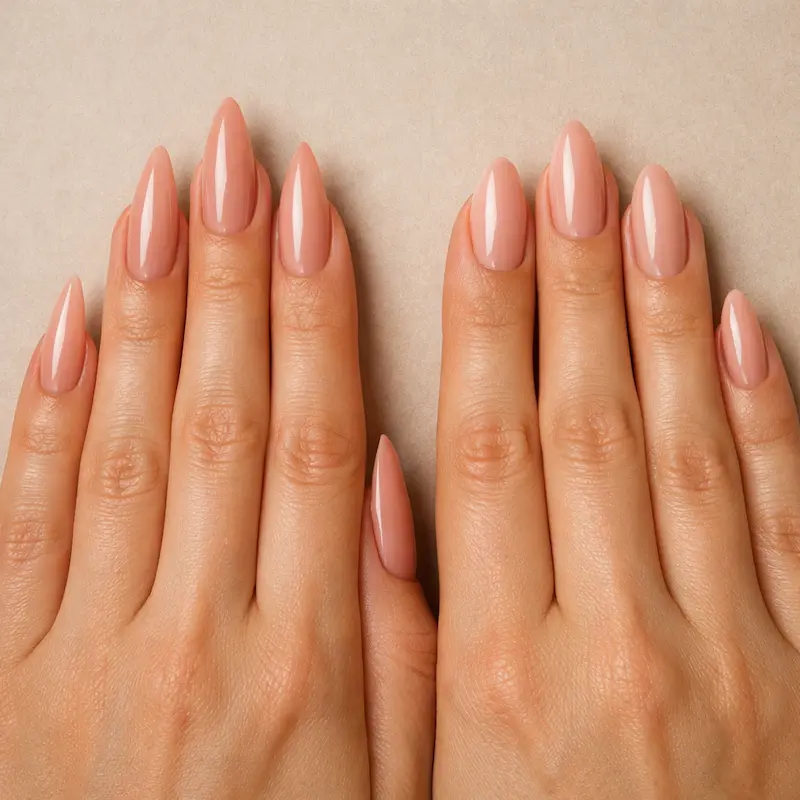
Stiletto comes to a sharp point. It’s the most dramatic shape on this list, and I won’t pretend it’s practical — typing, opening bags, texting without accidentally calling someone, all of it becomes a skill you have to relearn.
But for hands with wide palms or short-looking fingers, stiletto is actually one of the most visually elongating shapes that exists. The sharp point forces the eye to travel all the way up to the tip, which creates length almost regardless of what your actual finger length is. Most people wear stiletto with acrylics or hard gel because the natural nail at that point is just too fragile.
If you love the elongating effect but want something more wearable day-to-day, almond delivers about 70% of the same visual result with far less nail drama.
Coffin — When Length Does the Heavy Lifting
Coffin (sometimes called ballerina) is tapered like almond but with a flat tip instead of a point. It’s a dramatic shape that photographs incredibly well, and the length requirement is real — coffin doesn’t work on short nails, full stop.
The flattering news: coffin is actually great for wide palms when worn at medium-to-long length. The tapered sides slim the finger visually, and the flat tip keeps it from going full stiletto territory. Short coffin on wide hands is where it goes wrong — the proportions just don’t work.
Long fingers with narrow nail beds? Coffin will look natural and effortless. If you’re browsing for inspiration, the ombre summer nail ideas on the site feature a lot of coffin shapes done really well — good reference point for length and proportion before you commit.
Round — Underrated for Natural Nails
Round is basically oval’s shorter, more practical sibling. The sides follow the finger’s natural shape and the tip is curved — no sharp edges, no dramatic taper. It’s the shape most nails default to if you just trim them and don’t file much.
Where round shines is on short natural nails that you actually want to keep short. Square at short length can look stubby. Oval at short length can look like you just didn’t finish filing. Round at short length looks intentional — neat, clean, and low maintenance. It’s also the kindest shape on nails that are recovering from damage or breakage, since there’s minimal structural stress on any one point.
Not the most exciting shape, but if healthy nails are the goal right now, round while you grow them out is a genuinely good call. Once you have more length to work with, you can start experimenting — and making sure your nails are actually strong enough to hold a shape is part of knowing how to take care of your nails properly.
Quick Tips for Choosing Your Shape
- Short fingers → avoid square and wide shapes. They add horizontal width which makes fingers look shorter. Oval, almond, or stiletto all add vertical length visually.
- Wide nail beds → taper is your friend. Any shape that narrows toward the tip — almond, coffin, stiletto — will slim the nail bed. Square and squoval will emphasize the width.
- Long slender fingers → almost anything works. You have the most flexibility. Square and coffin look particularly sharp on long narrow fingers.
- Natural short nails → oval or round. Trying to hold an almond or coffin shape on very short natural nails usually ends in a break. Build length first, then shape.
- If you want nail art to read clearly → square or squoval. Flat surface area shows off designs. Pointed shapes work better for simpler, bolder looks.
- Not sure? Start with oval. It genuinely suits almost every hand type and gives you a baseline to decide whether you want more drama or more simplicity from there. Then explore easy nail art designs for beginners at home to see what different shapes look like with actual color and design on them.
FAQ
What nail shapes for hand type work best for short fingers?
Almond and oval are the go-to choices. Both create a vertical line that makes fingers read as longer than they are. Avoid square or squoval at short lengths — the horizontal edge at the tip works against you here.
Can I wear coffin nails if I have wide palms?
Yes, but length is key. Short coffin on wide palms tends to look blocky because the taper doesn’t have room to do its job. A medium-to-long coffin with properly tapered sides draws the eye up and actually balances a wider palm quite well.
Is stiletto practical for everyday wear?
Not really, no. The narrow tip is fragile on natural nails, and daily tasks genuinely become harder. Most people who commit to stiletto regularly use acrylics or hard gel for durability. Almond gives you a similar elongating effect with a lot less breakage anxiety.
Does nail shape affect how nail art looks?
More than most people realize. Detailed nail art reads best on square or squoval because there’s more flat surface to work with. Ombre gradients look great on almond and coffin. Stiletto suits bold, graphic, or single-color looks where the shape itself is the statement. Before picking your art, it helps to look at pretty nail designs by shape to see what actually translates well.
What’s the most universally flattering nail shape?
Oval. It works across almost every hand type, holds up well on natural nails, and looks polished without requiring dramatic length. When someone asks me where to start with nail shapes for hand type, oval is always the first answer.
So, Which Shape Is Actually Yours?
If I had to pick one shape I’d never go back from, it’s almond — but I have specific hands that it suits well, and I spent time figuring that out. The shape that’s right for you might be completely different, and that’s the whole point. Start with your palm width and finger length, use the logic in this guide as a filter, and don’t be afraid to try something that breaks the “rules” if you genuinely love how it looks. Rules in nail shapes are just suggestions dressed up as advice.
Choosing the right nail shapes for hand type is honestly one of the lowest-effort upgrades you can make to your whole nail look — same polish, same care routine, just a shape that actually works with your hands instead of against them. What shape are you currently wearing, and does it actually suit you? Drop it in the comments — I’m curious whether anyone else spent years in the wrong shape before figuring it out.