
Last Updated on April 17, 2026 by Sara Belle
The last time I peeled my gel nails off — yes, peeled, don’t judge — I spent the next two weeks staring at paper-thin, bendy nails that broke every time I opened a can. I thought I was saving money. I was actually undoing months of growth. That’s the moment I finally sat down and figured out how to do this properly, and I haven’t had a gel removal disaster since.
If you’re trying to figure out how to remove gel nails at home without damage, this is exactly what you need. Not a vague list of steps — a real walkthrough with the things people don’t usually tell you, like why timing matters more than products, and what to do the minute the gel comes off.
There are a few different approaches depending on what you have on hand, so I’ll walk through each one. Pick what works for you.
What You Actually Need
Before anything else — gather everything. Having to stop mid-soak to find a cotton pad is how you end up with one hand done and acetone drying on the other. Here’s the list:
- 100% pure acetone (not regular nail polish remover — the concentration is too low)
- Coarse nail file (100–150 grit)
- Cotton pads or balls
- Aluminum foil, cut into small squares
- Orange stick or cuticle pusher
- A buffing block
- Cuticle oil — this is non-negotiable
- Hand cream or thick moisturizer
Petroleum jelly is optional but honestly worth applying around your cuticles before you start — acetone is aggressive on the skin surrounding the nail.
The Foil-Wrap Method (Most Reliable)
This is my personal favorite and the one I’d recommend to anyone doing this for the first time. It’s not fast — plan on about 40 minutes — but it’s the gentlest way to lift gel without scraping half your nail off with it.
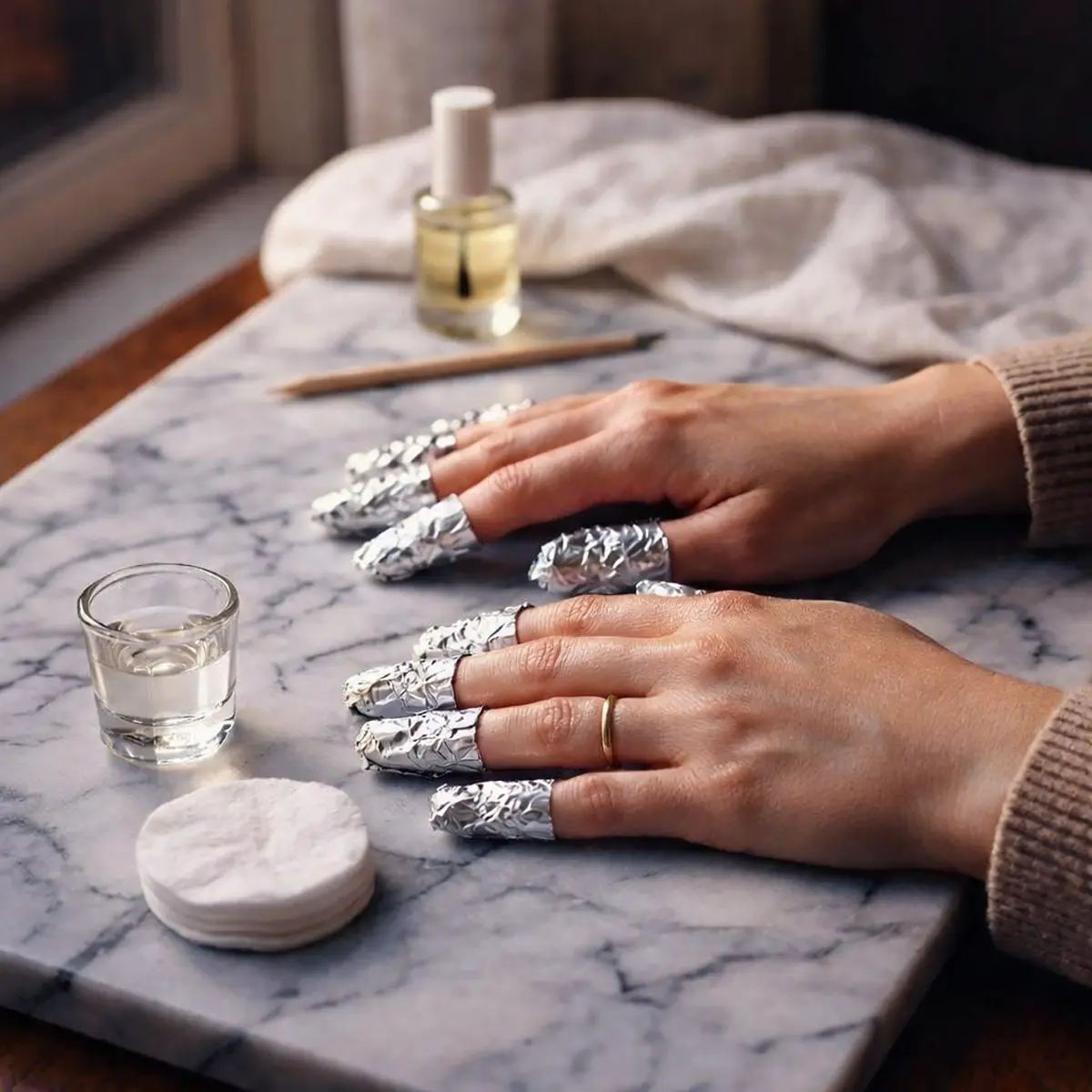
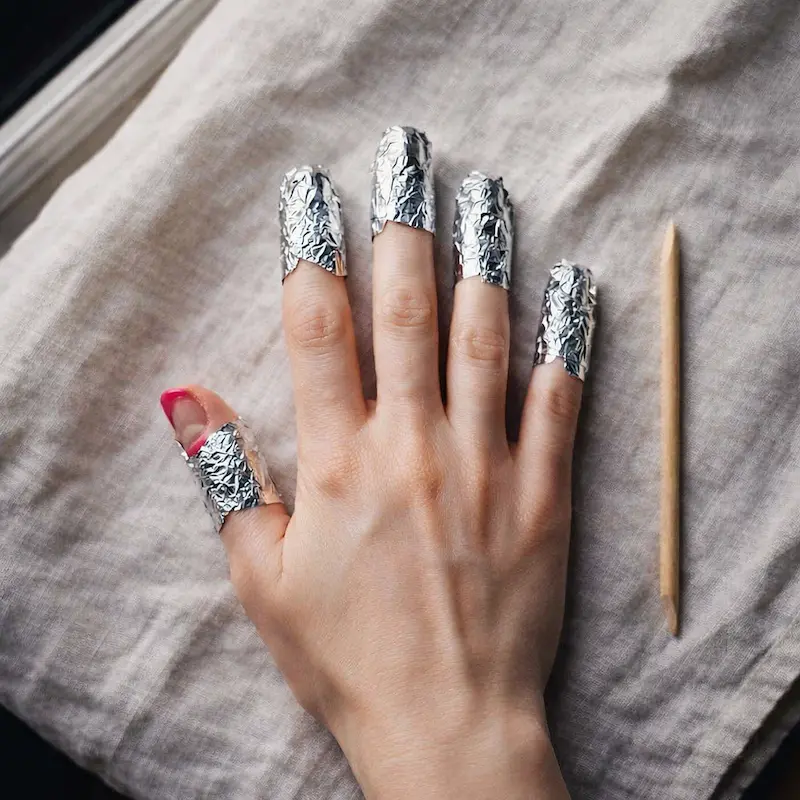
Start by lightly filing the shiny top coat off your gel. You’re not trying to file through the whole thing, just break the seal so the acetone can get underneath. One to two minutes per hand is enough. Then soak a cotton pad in acetone, press it directly against the nail, and wrap it tightly with a square of foil. Repeat for all ten fingers and set a timer for 15 minutes. Don’t peek early.
When you unwrap, the gel should look cloudy and be pulling away from the nail. Use your orange stick to gently push it toward the tip — it should slide off in soft pieces. If it’s still stuck, wrap for another five minutes. The one thing I cannot stress enough: if it doesn’t move easily, do not force it. That resistance means the gel is still bonded. Forcing it is exactly what causes thinning and peeling of the natural nail plate. Since I started being strict about this rule, I haven’t had a single damaged nail from removal.
The Bowl Soak Method
Simpler setup, slightly messier experience. Fill a small bowl with acetone, then place that bowl inside a larger bowl of warm water — this keeps the acetone at a comfortable temperature, which makes it work faster. Soak your fingertips for 10–15 minutes, then check the gel.
The issue with this method is that your skin absorbs more acetone than with foil, so you’ll want to moisturize heavily afterward. It also takes slightly longer for the gel to lift evenly. That said, it works perfectly well — especially if you’re dealing with thinner gel polish rather than hard gel extensions. If you’re also curious about how to take care of your nails during and after the process, that guide has everything you need for recovery.
Removing Gel Without Acetone
Let me be upfront: this is genuinely harder. Not impossible, but harder. If you have sensitive skin or just don’t have acetone on hand, here’s what actually works to some degree.
Soak your nails in warm, soapy water for about 20 minutes to soften the edges, then use a fine-grit file to very slowly thin the gel surface. Work in one direction only, never back and forth, and check frequently. This method is more about patience than technique. Once the gel layer is visibly thin, apply a generous amount of cuticle oil and let it sit — sometimes the oil will help the remaining layer lift at the edges enough to remove with an orange stick.
Expect the process to take 45–60 minutes and to leave a thin layer of gel that you’ll buff smooth at the end. Don’t aim for perfection; aim for “not damaged.”
What To Do Right After Removal
This part matters more than most people realize. The 30 minutes after removing gel is when your nails are most vulnerable. Here’s what I do, and it’s made a visible difference in how quickly my nails recover:
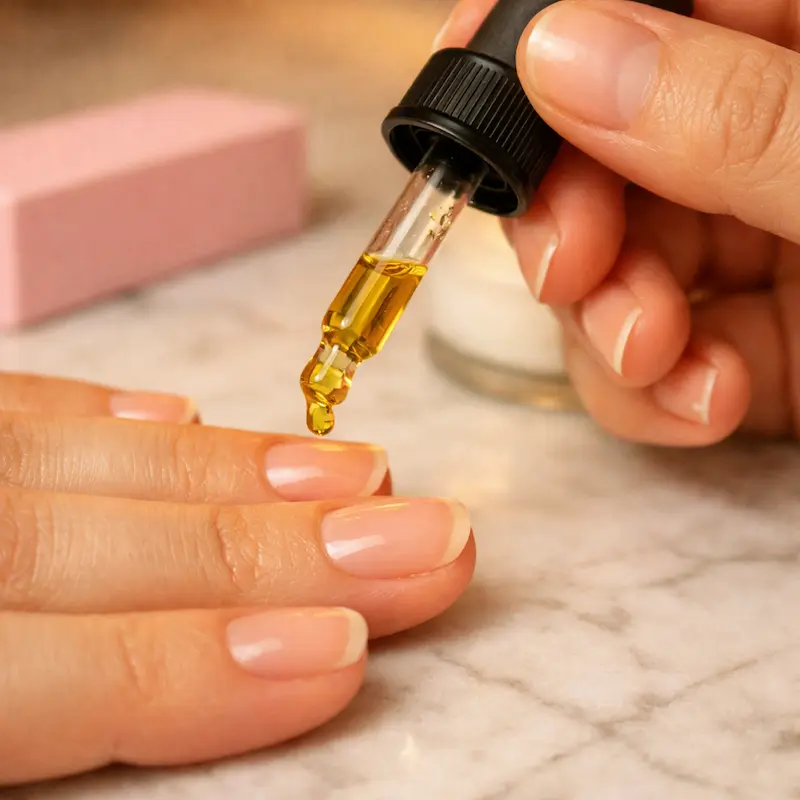
First, gently buff any remaining residue with a soft buffing block — don’t file, just buff. Then wash your hands thoroughly to remove all acetone. Apply cuticle oil immediately and massage it in for at least two minutes. Follow with a thick hand cream. If your nails feel particularly weak, apply a strengthening base coat the same day — something with keratin or calcium in the formula.
Give your nails a week without any polish at all if you can manage it. I know it feels odd, but the breathing room makes a real difference. And if you’re planning your next look already, browsing swirl nail designs that work beautifully over a freshly recovered natural nail might give you something to look forward to.
Practical Tips To Avoid Damage
- Never peel or force lift gel. If it’s not sliding off easily, it’s not ready. Five more minutes of soaking will save you two weeks of weak nails.
- File only the top coat, not the gel itself. Your goal before soaking is to break the shine, not to thin the gel down to the nail. Over-filing causes direct mechanical damage to the nail plate.
- Protect your skin. Apply petroleum jelly or a thick barrier cream around the cuticle area before you start. Acetone is rough on the surrounding skin even when it works perfectly on the gel.
- Use 100% acetone, not nail polish remover. Regular remover is too dilute and you’ll just end up soaking longer, which dries out your skin more without doing a better job on the gel.
- Keep nails short during recovery. Longer nails put mechanical stress on a weakened nail plate. Trim them down and let the new growth come in strong. To speed this along, the guide on how to make your nails grow faster has genuinely useful advice I’ve tested myself.
- Moisturize consistently for a week after. Cuticle oil once a day minimum. Your nails absorb very little through the plate, but the cuticle area does respond to consistent oiling — and healthier cuticles mean healthier new growth.
FAQ
Can I remove gel nails at home without acetone?
Yes, but it takes more patience. You can use a combination of warm water soaking, gentle filing, and cuticle oil to soften and lift the gel slowly. It’s less efficient than acetone but safer for very sensitive nails.
How long does it take to remove gel nails at home?
Typically 30 to 45 minutes using the foil-wrap acetone method. If you rush and skip the soaking time, you risk peeling layers off your natural nail, which causes real damage.
Why are my nails thin after removing gel polish?
This usually happens from scraping or peeling the gel off before it’s fully lifted. The top layer of your natural nail comes off with it. Always let the acetone do the work — don’t force anything.
How to remove gel nails at home without damage if I don’t have foil?
Soak a cotton pad in acetone, hold it against the nail, and wrap with plastic wrap or a reusable silicone cap instead. It works just as well and creates the same enclosed environment that softens the gel.
How do I take care of my nails after removing gel at home?
Apply cuticle oil immediately after removal, then use a strengthening base coat for the next two to three weeks. Keep nails short while they recover and avoid soaking in water for long periods. You might also want to explore some pedicure ideas in the meantime — a fresh pedicure is a nice way to feel put-together while your hands are taking a break.
Before You Grab That Orange Stick
If there’s one thing I’d tell you to take from all of this, it’s that how to remove gel nails at home without damage comes down almost entirely to patience. The foil-wrap method with 100% acetone and a proper soak time is the most reliable way to do this without wrecking your nails — I’ve tried everything else, and nothing comes close for the combination of safety and effectiveness. The post-removal care is what most guides skip, but it’s honestly just as important as the method itself.
Have you tried removing gel at home before? Did it go smoothly, or are you recovering from a peeling situation like I was? Drop a comment — I’d genuinely love to know which method you end up trying.

Shop my favorite picks on Amazon
VISIT MY STOREFRONT 🛒